
Stopping Repeat Damage Without Replacing Working Equipment.
Equipment can keep running and still be a problem.
.
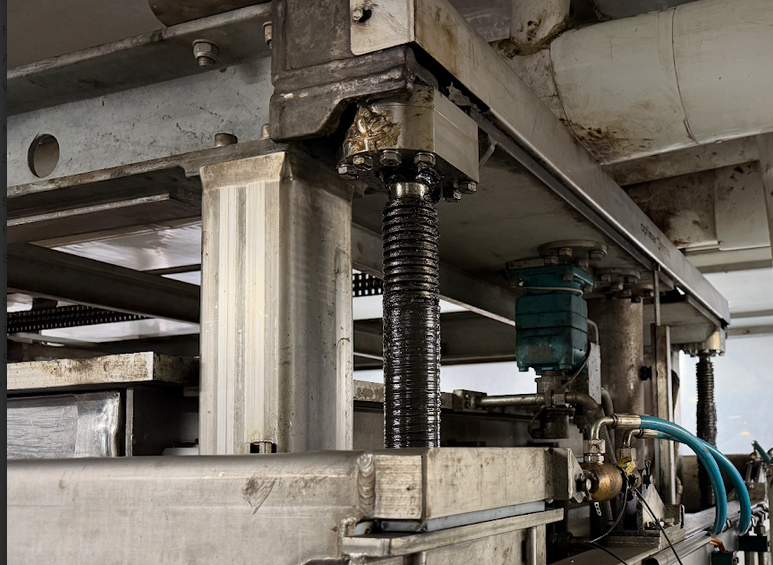
On a commercial fishing vessel with onboard freezing, plate freezers ran continuously during production. Output was steady. Nothing appeared broken.
But occasionally, pans entered a freezer slightly misaligned. When that happened, the hydraulic sequence continued anyway. A pneumatic cylinder over-extended and blew seals. The crew rebuilt the same cylinder again and again.
The freezer stayed online, but the same problem kept coming back, with increasing risk each time.
What Was Going Wrong
Correct movement and alignment were only confirmed on the outbound side, via a proximity sensor.
If a pan jammed slightly on entry, nothing intervened early in the cycle. The hydraulics still closed, which is what caused the repeated damage.
Why the “Clean” Fix Wasn’t Available
The obvious solution was to add inbound confirmation and adjust the PLC logic so the freezer could respond sooner.
That wasn’t possible. The PLC was locked, and the source code wasn’t accessible without the OEM. Their only supported path was full freezer replacement.
On a fishing vessel, replacing a working set of plate freezers to address a problem of this scale - no matter how disruptive - isn’t practical. These are large, multi-ton systems, and removing them would be major surgery.
The Practical Solution
An inbound proximity sensor was added and wired in series with the existing outbound sensor.
If either side indicated a jam, the freezer stopped before damage occurred, protecting both the equipment and the pans.
The modification was tested on one freezer, then applied across the remaining identical units.
What Changed
Pan jams are now caught early, preventing equipment damage. The crew is no longer rebuilding the same cylinder, and the freezer runs without ongoing issues.
“We haven’t had any of the catastrophic crashes we were trying to prevent. We’ve tested all the freezers and we’re confident they’ll stop in time to avoid damage.”
— Customer engineer
Operational Impact
The modification prevented recurring mechanical damage without requiring capital replacement of functioning equipment. For operations leadership, that meant eliminating repeat maintenance labor and reducing the risk of escalating failure while keeping the freezer online. At a certain point, replacing seals was no longer solving the condition. It was only managing the symptom.
Crews on working vessels are good at fixing problems. On this occasion, they decided not to keep fixing the same one!
Engineering Considerations:
When does modification make more sense than full equipment replacement?
When the core system is functioning and the failure is localized to a specific control or mechanical blind spot. In those cases, targeted modification can eliminate repeat damage without the disruption and capital expense of full replacement.
What causes a hydraulic cylinder in a plate freezer to over-extend?
If pan alignment isn’t confirmed before the hydraulic close sequence begins, a slightly misaligned pan can force the cylinder past its intended travel, leading to seal failure.
How can motion be stopped earlier without modifying PLC code?
An upstream confirmation device, such as an inbound proximity sensor, can be wired into the existing permissive chain so the cycle cannot start unless alignment is verified.
Can protection be added if the PLC program is locked?
Yes. A hardware interlock can be added in series with an existing safety or permissive circuit, preserving current system behavior while adding earlier fault detection.